Papuguinho: an AAC companion for early communicators and caregivers
Papuguinho, developed by Papuguinho and created by students at the Federal Institute of São Paulo (IFSP), is an augmentative and alternative communication application designed to help children with Autism Spectrum Disorder and other speech impairments. The app uses colorful visual icons and a parrot mascot to build phrase sequences that convert into spoken messages via voice synthesis. It targets families, therapists, and classroom assistants aiming to improve everyday communication and build independence.
Academic and social-impact origins shape practical design
Papuguinho is a student-led social impact project developed at IFSP, and the team reports technical oversight during creation. That background explains design choices prioritizing inclusion and straightforward use in family or clinic settings. The project's origin signals an emphasis on accessibility and local adaptation rather than a commercial roadmap, a fact that can matter to schools and therapists choosing tools aligned with educational values.
Parental controls support supervised learning sessions
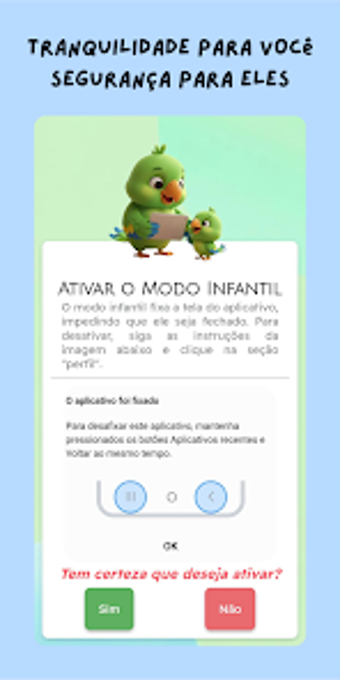
The app includes a protected Parent Area called Safe Child Mode that prevents accidental changes, using challenges such as math problems or biometrics for access. This protection lets caregivers set up and control study or therapy sessions without constant supervision, which suits environments where a child explores the interface independently. The parental gate is a concrete safety mechanism for classroom assistants and home caregivers during practice time.
Customization and monitoring fit classroom and therapy workflows
Papuguinho offers full customization of communication boards and an access history for monitoring, features that match teacher and therapist workflows. Caregivers can adapt icon sets to routines and review past exchanges for assessment or reporting. The app is built with the Flutter framework for smoother performance on Android devices, a practical detail for deployments that depend on consistent responsiveness during learning activities.
Deployment and scope considerations for educators
Because the app targets Android devices, device selection matters when planning classroom-wide use. Customization delivers flexibility but requires caregiver or professional time to configure boards for each learner, so initial setup is an implementation task. The project emphasizes basic, routine communication and does not present a documented progressive language curriculum for staged grammar development, a consideration for programs seeking long-term language sequencing.
Well-suited for early communicators in caregiver-led settings
Papuguinho is a practical option for families and therapists who want an accessible AAC companion that supports everyday phrase-based exchanges; educators should plan setup time and pair the app with structured language instruction for learners needing progressive grammatical targets. The project’s academic origins and built-in parental protections make it a viable tool for supervised practice in home and clinic environments.